Artificial intelligence is transforming the web design landscape, offering new possibilities for creating personalized and intuitive user experiences. In this article, we will explore how AI is redefining every aspect of web design in 2026, from interface optimization to workflow automation.
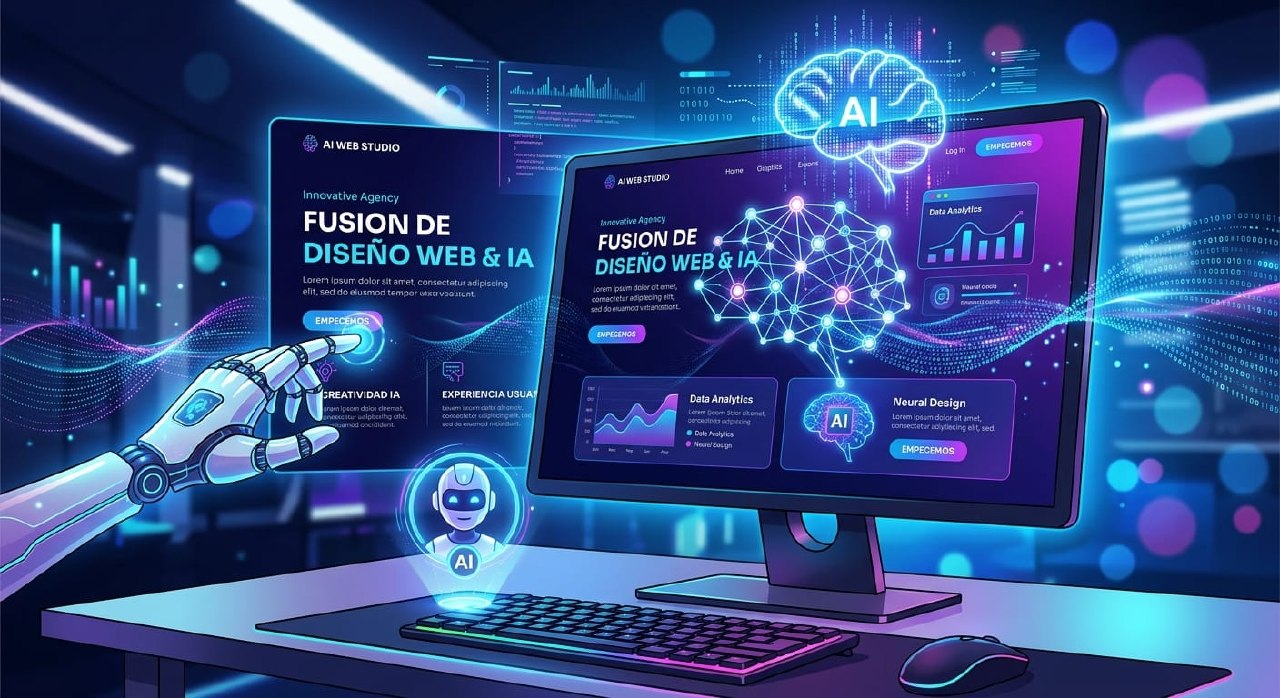
Below, the representative image of AI's impact on web design:
AI as a Driver of Personalization and User Experience
At the heart of modern web design lies user experience (UX), and AI is taking this to a new level. Intelligent algorithms can now analyze visitor behavior patterns in real-time, from browsing history to purchase preferences and content interactions. This capability allows websites to adapt dynamically, displaying content, offers, and designs that are unique to each user. This not only improves relevance but also significantly increases retention and conversion rates.
To better understand the importance of a well-structured web design, we invite you to read about the importance of personalized web design.
UX/UI Optimization with Advanced Machine Learning
Machine Learning (ML), a branch of AI, is fundamental to optimizing both user experience (UX) and user interface (UI). Web designers no longer need to rely solely on assumptions or extensive manual A/B testing. ML-powered tools can perform multivariate testing at an unprecedented scale, identifying the most effective design elements, colors that generate the most interaction, or the most intuitive navigation flows. Furthermore, ML can predict user needs before they are expressed, offering proactive solutions and improving overall site usability. The fusion between web design and UX/UI is indispensable for winning over customers, and AI makes it even more powerful.
Automation in the Design Process: Efficiency and Precision
AI not only influences the final outcome but also the design process itself. AI tools are automating repetitive and time-consuming tasks, such as generating wireframes based on requirements, creating high-fidelity prototypes, optimizing code for performance and SEO, and even generating initial content. This frees up designers to focus on more strategic and creative aspects, such as conceptualization and innovation, elevating the overall quality of work and reducing delivery times. This focus on efficiency is key to a professional web design that ensures digital success.
Challenges and Ethical Considerations in the AI Era
While AI offers immense potential, it also presents challenges. Ethics in AI-driven design is a growing field. We must be aware of the biases that can be introduced into algorithms, user data privacy, and the impact on the designer job market. Transparency and responsibility in the use of AI are fundamental to building trust and ensuring that technology serves the interests of users and society.
The Future of the Web Designer: Collaboration and Augmented Creativity
Contrary to popular belief, AI will not replace web designers but transform them. The designer of the future will be an AI collaborator, using its tools to enhance creativity, optimize workflows, and create more sophisticated solutions. The ability to understand and direct AI, as well as to focus on strategy and human vision, will be more valuable than ever.
Conclusion
Artificial intelligence is not a passing trend in web design, but a transformative force. In 2026, designers and agencies that embrace AI will not only optimize their processes and improve user experience but also position themselves at the forefront of digital innovation. The future of web design is intelligent, personal, and collaborative.