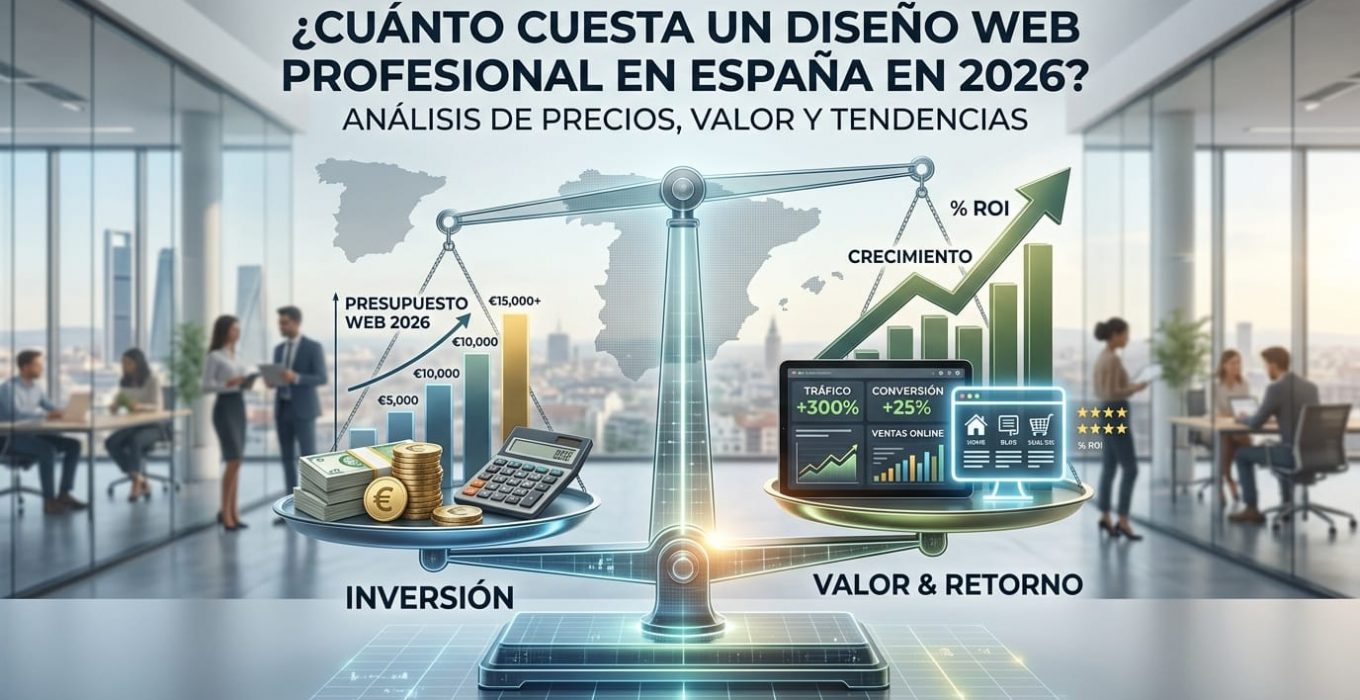
How Much Does a Professional Web Design Cost in Spain in 2026? Price Guide and Key Factors

Una de las primeras preguntas que surge al plantearse una presencia digital es, invariablemente: “¿Cuánto me va a costar?”. En el dinámico mercado español de 2026, el price of professional web design can vary significantly, not arbitrarily, but due to a series of key factors that determine the complexity, functionality, and long-term value of the project. Understanding these elements is crucial for making a smart investment that drives digital business success.

In adrianalcala.es, we advocate for transparency and customer education. This article will break down the different price ranges for a professional web design in Spain, exploring the factors that influence the cost and helping you understand what to expect based on your needs and goals. In the end, you will not only know how much a website costs, but why.

1. Demystifying Web Design Pricing: An Investment, Not an Expense

When we talk about the price of professional web design, we are not referring to a generic product with a fixed price tag. We are talking about an investment in your business's digital infrastructure, a tool that will work 24/7 to attract clients, generate sales, and build your brand. The final cost depends largely on the scope and complexity of the project, similar to building a house: an apartment is not the same as a mansion.

In Spain, costs can range from a few hundred euros for very basic solutions to tens of thousands for large-scale custom projects. The key is to align investment with your business objectives.

2. Key Factors Influencing the Cost of Web Design in Spain

The cost of professional web design is composed of several interrelated elements:

  • Website Type:
    • Landing Page: A single page optimized for a specific action (e.g., lead generation). They are usually the most economical.
    • Corporate/Presence Website: Several sections (Home, Services, About Us, Contact) to present the company. Requires more content and structure. We can help you with a Corporate Page.
    • Online Store (E-commerce): It involves product catalogs, payment gateways, stock management, etc. They are the most complex and therefore the most expensive. If you need a Online Store, we are experts in WooCommerce and Shopify.
    • Custom Web / Portal: Very specific functionalities, integration with external systems, custom developments. The investment is higher due to programming complexity.
    • Booking/Course Pages: For businesses that need to manage appointments, classes, or events. We offer booking pages customized.
  • Design and Customization:
    • Standard Template: More economical, but with less differentiation.
    • Custom Design: A unique design that reflects your brand identity, optimized for user experience (UX/UI). This is our specialty and guarantees a greater impact.
  • Specific Functionalities: Image galleries, advanced forms, social media integration, multilingualism, blogs, comment systems, live chats, complex databases, client areas, etc. Each extra functionality adds complexity and cost.
  • Content (Texts and Images): The creation of SEO-optimized texts and the acquisition/creation of high-quality images and videos can be included or be an additional cost.
  • SEO Optimization: A web design that from the start is designed for search engine positioning. This includes a Google-friendly structure, loading speed, mobile adaptability, strategic keywords, and integration with tools like Google Search Console. For an evaluation, you can request our free web audit.
  • Maintenance and Support: Security updates, backups, technical problem resolution, content updates. A good support and maintenance service is crucial for the longevity and security of your investment.
  • Integrations: Connectivity with CRMs, email marketing tools (e.g., Mailchimp), analytics tools (Google Analytics), etc.

3. Web Design Price Ranges in Spain (2026 Estimate)

While it's difficult to give exact figures without knowing the project, we can establish general ranges for the cost of professional web design in Spain in 2026:

  • Landing Page or Single-Page Website: From €400 to €1,200. (Ideal for specific campaigns or presenting a unique service/product).
  • Corporate or Small Business Website (5-10 sections): From €1,500 to €4,000. (For a complete and professional online presence).
  • Online Store (Basic E-commerce with ~50 products): From €2,500 to €8,000. (WooCommerce or Shopify, with initial setup and adapted design). For larger projects, the investment can exceed €10,000.
  • Custom Websites or with Advanced Functionalities: From €8,000 to +€20,000. (Complex projects requiring custom development, complex integrations, or custom management systems).

These figures are estimates and can vary depending on the agency, freelance designer, reputation, geographic location, and the specific complexity of each requirement.

4. Why Do Prices Vary So Much? The Value of Investment

The difference in the price of web design no solo radica en la cantidad de horas de trabajo, sino en el valor estratégico que aporta. Una agencia profesional como adrianalcala.es no solo “crea una web”, sino que:

  • Performs an analysis of your business and competition.
  • Designs an intuitive user experience (UX).
  • Creates an attractive user interface (UI) consistent with your brand.
  • Implements SEO optimizations from the start.
  • Offers post-launch technical support and maintenance.
  • Focuses on results: conversions, sales, leads.

Cheap, low-quality web design can result in a poor user experience, technical issues, low Google rankings, and ultimately, a loss of opportunities and money.

Conclusion: Invest in the Web Design Your Business Deserves

The Professional Web Design in Spain in 2026 is a strategic investment that defines your brand's perception, optimizes your reach in the vast digital ocean, and undeniably boosts your business results. Knowing how much a website costs is just the beginning; understanding the value each euro brings is the real key.

In adrianalcala.es, we don't just build websites; we build custom digital growth platforms. We analyze your needs, define the right strategy, and develop a solution that not only fits your budget but exceeds it in results.

Ready to get a professional web design that is a true investment for your future? Request a personalized quote and discover the value of an excellent digital presence.
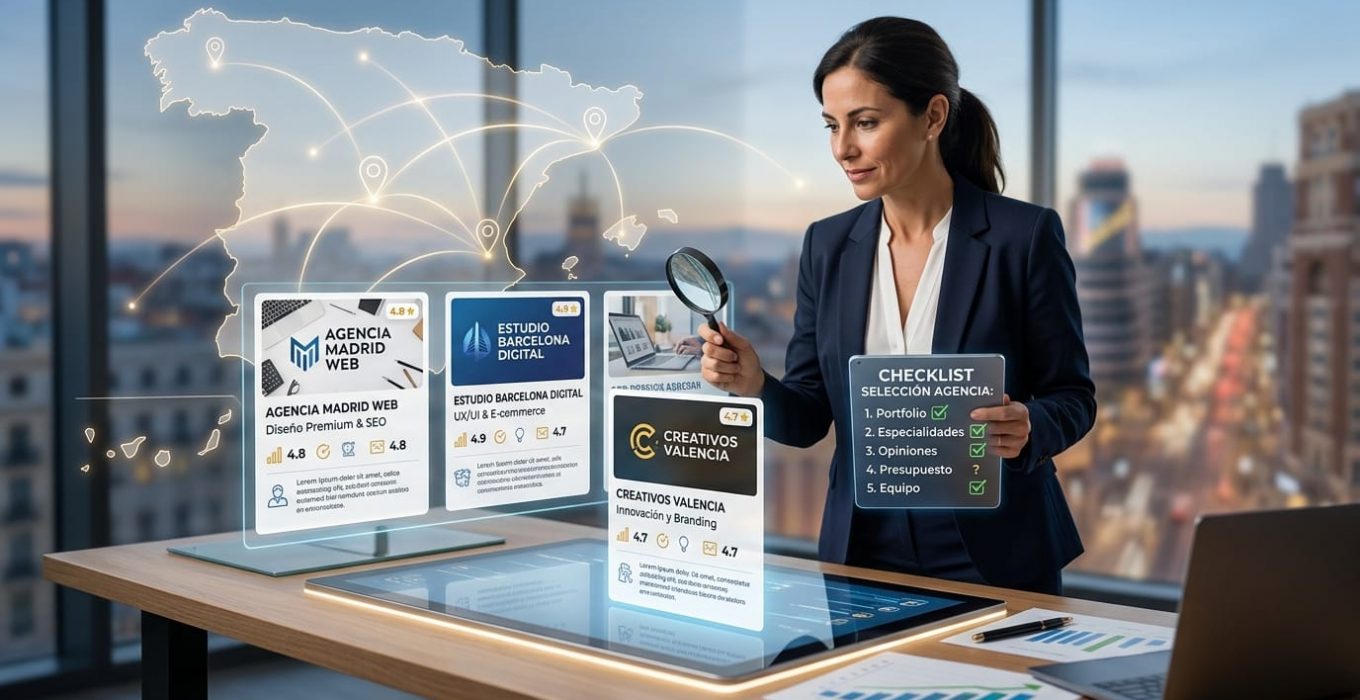
How to Choose the Best Web Design Agency in Spain: Keys to Your Digital Success

En el vasto y competitivo panorama digital de España, tener una página web ya no es una opción, sino una necesidad imperante. Pero, ¿cómo asegurarse de que esa web no solo “esté ahí”, sino que sea una auténtica herramienta de crecimiento y conversión? La respuesta a menudo reside en la elección de su socio estratégico: la agencia de web design suitable. However, with so many options available, the selection process can seem overwhelming.

In adrianalcala.es, we understand the importance of this decision. This article will serve as a comprehensive guide to know how to choose the best web design agency in Spain, breaking down the fundamental keys that will lead you to digital success and help you avoid costly mistakes. Invest intelligently in your online future.

1. Beyond the Portfolio: Define Your Needs and Objectives

Before looking for agencies, take a moment to define exactly what you need. Are you looking for a landing page for a specific campaign, a corporate website robust, a online store (e-commerce) or a platform with custom functionalities? Your business objectives (generating leads, increasing sales, improving branding) should be the starting point.

A good agency will not only ask you what you want, but will help you define *what you need* to achieve those goals, even if they go beyond pure web design (e.g., SEO, digital marketing).

2. Keys to Identifying the Best Web Design Agency in Spain

Once you have your objectives clear, it's time to evaluate your options. Here are the crucial factors:

  • Experience and Specialization:
    • Relevant Portfolio: Examine the portfolio of the agency. Have they worked with businesses similar to yours? Are the designs modern, functional, and visually appealing?
    • Specialization: Are they experts in your sector or the type of website you need (e-commerce, bookings, etc.)? Do they master platforms like WordPress and WooCommerce?
  • Work Methodology and Communication:
    • Transparent Process: What is their design and development process like? Do they keep you informed at every stage? Do they use project management tools?
    • Fluid Communication: Are they accessible? Do they respond quickly to your inquiries? Good communication is essential for project success.
  • Focus on Results (Beyond Aesthetic Design):
    • SEO Orientation: A quality agency understands that web design must be optimized for search engine ranking. Ask about their experience in SEO and how they integrate it into the design.
    • User Experience (UX) and Conversion (CRO): The design should be intuitive and aimed at converting visitors into customers. Do they pay attention to UX/UI and conversion rate optimization?
    • Web Analytics: How do they measure success? Do they use tools like Google Analytics and Google Search Console?
  • Post-Launch Support and Maintenance:
    • A website is not a static product. It needs security updates, backups, and technical assistance. Ask about their post-launch support and maintenance.
  • Reputation and Reviews:
    • Look for online reviews, testimonials, and success stories. What do other clients say about their experience with the agency?
  • Transparency in Budgeting:

3. Common Mistakes When Choosing a Web Design Agency (and How to Avoid Them)

Avoiding these mistakes will save you time and money:

  • Prioritizing only Low Price: The cheap comes out expensive. Low-quality web design can damage your image, your SEO, and your sales capacity. Look for value, not just the lowest cost.
  • Ignoring SEO and UX: A beautiful but invisible or difficult-to-use website is ineffective. Ensure the agency has a comprehensive approach.
  • Lack of Clear Communication: Communication problems from the start are a red flag.
  • Not Understanding the Contract: Read the terms of service carefully, what maintenance includes, warranties, etc.

Conclusion: Choosing the Strategic Partner for Your Digital Future

Choosing the best web design agency in Spain is a strategic decision that will directly impact the trajectory of your online business. It's not a trivial choice, but about finding a partner who shares your vision and possesses the experience and methodology to make it a reality.

In adrianalcala.es, we pride ourselves on being that partner. We combine innovative design with results-oriented SEO and conversion strategy, offering tailor-made solutions that not only meet but exceed our clients' expectations throughout Spain. We understand the market, master the technology, and above all, are committed to your success.

Ready to take the leap and work with an agency that understands your business? Contact us today for a personalized consultation and discover how we can boost your digital presence.

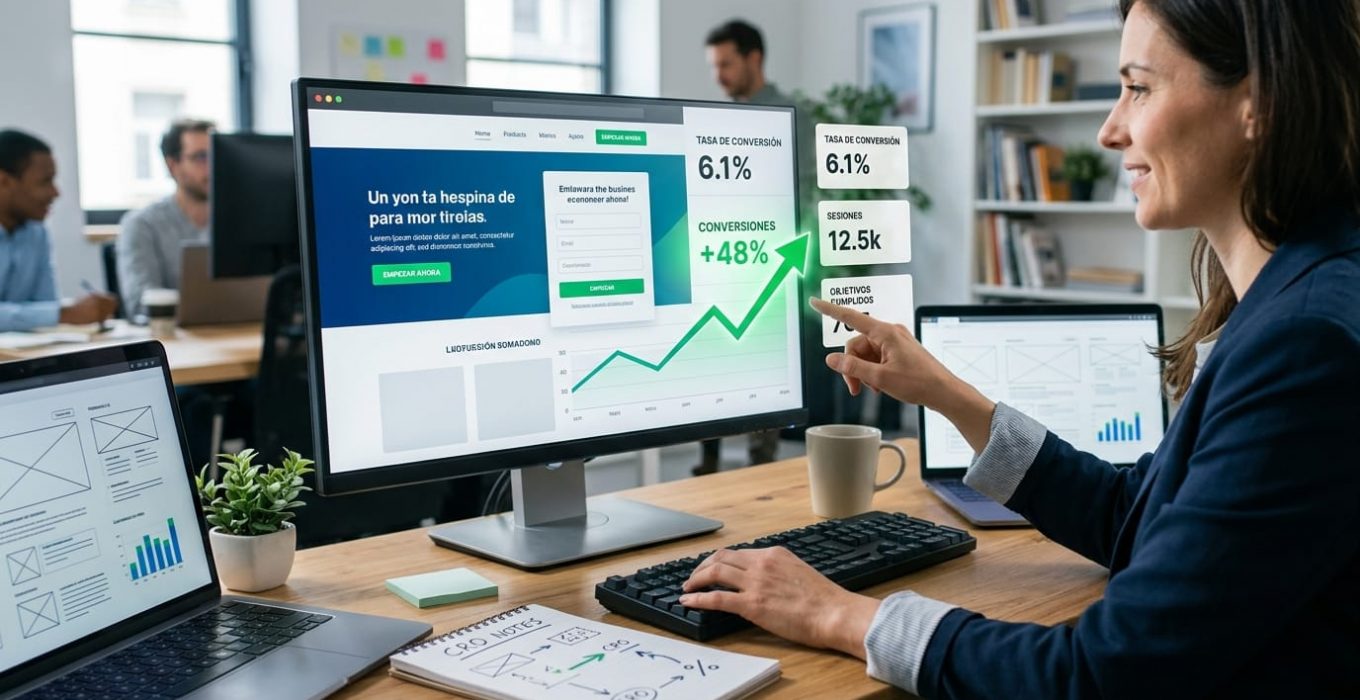
CRO and Web Design: Strategies to Convert Visitors into Loyal Customers

In the competitive digital ecosystem, attracting traffic to your website is only half the battle. The real victory is celebrated when those visitors transform into loyal customers, engaged subscribers, or qualified leads. This is where Conversion Rate Optimization (CRO), a discipline that, when strategically merged with a Web Design smart, becomes the most powerful tool for your business growth.

In adrianalcala.es, we know that every pixel and every interaction on your website has a purpose: to guide the user towards action. This article will reveal key CRO strategies applied to web design, showing you how to optimize every element to not only attract attention but to turn visitors into loyal customers and maximize your digital investment return.

1. Understanding CRO: The Science Behind Conversion

The Conversion Rate Optimization (CRO) es el proceso sistemático de aumentar el porcentaje de visitantes de un sitio web que realizan una acción deseada (una “conversión”). Esta acción puede ser una compra, un registro, una descarga, una solicitud de presupuesto, etc. No se trata de atraer más tráfico, sino de get the most out of existing traffic.

CRO is based on data analysis, understanding user behavior, and implementing measurable changes. This is where the web design plays a crucial role, as it is the primary interface through which the user interacts with your brand and its calls to action.

2. Web Design as a Fundamental Tool for CRO

A web design effective is not just pretty; it's functional and conversion-oriented. Every visual and structural element must work in harmony to reduce friction, build trust, and motivate the user to move forward in the conversion funnel. These are some key strategies:

  • Irresistible Calls to Action (CTAs): Un CTA bien diseñado es claro, conciso y visible. Utilice un lenguaje persuasivo (“Comprar ahora”, “Descargar gratis”, “Solicitar demo”), colores contrastantes y una ubicación estratégica (por encima de la línea de flotación, al final de una sección relevante). Si busca un diseño que convierta, explore nuestros servicios de web page design.
  • Optimized Form Design: Forms are critical conversion points. Reduce the number of fields to the minimum necessary, use real-time validation, clear labels, and a visual design that conveys simplicity and security. For an evaluation of your forms, consider our free web audit offer.
  • High-Performance Landing Pages: Design landing pages focused on a single conversion goal. Minimize distractions, keep the message clear, present benefits concisely, and ensure the CTA is prominent. We create optimized landing pages to maximize your results.
  • Color Psychology in Design: Colors evoke emotions and can influence decision-making. Understand how to apply a strategic color palette to guide user attention to conversion elements and reinforce your branding.
  • Social Proof and Trust Elements: Integrate testimonials, reviews, client logos, security badges, and certifications. These elements of social proof increase credibility and reduce perceived risk, driving conversion. See examples in our portfolio.

3. Design Elements That Boost Conversion Rate

Beyond general strategies, certain web design elements have a direct and measurable impact on CRO:

  • Clarity and Simplicity: A clean and uncluttered design eliminates distractions and allows the user to focus on the main content and CTAs. The information overload is an obstacle to conversion.
  • Loading Speed: A slow website is a conversion killer. Optimize images, code, and server to ensure an ultra-fast experience. Every second of delay can mean a significant loss of potential customers. Our services for support and maintenance include performance optimization.
  • Responsive and Mobile-First Design: Most users access the web from mobile devices. A design that adapts perfectly to all screens ensures a consistent and accessible experience, crucial for conversion in any context. At Web Design Services in Denia, we prioritize responsive.
  • Visual Hierarchy: Guide the user's eye through the page using the size, color, contrast, and placement of elements. The most important points (title, value proposition, CTA) should be the most prominent.
  • Strategic Use of White Space: Negative space helps organize content, improves readability, and directs attention to key elements, preventing visual clutter.

4. CRO and SEO: A Powerful Alliance

Although CRO focuses on conversion and SEO on visibility, both disciplines share common goals and reinforce each other:

  • A good web design with optimized CRO improves the user experience (UX), which translates into more time on site, lower bounce rate, and more pages visited. These are positive factors that Google values for SEO ranking.
  • A site that converts well tends to generate more interactions, which can lead to more mentions, natural links, and social signals, all of which are beneficial for SEO.
  • SEO attracts qualified traffic; CRO ensures that traffic is not lost. Together, they maximize the ROI of your digital strategy.

Conclusion: Design to Sell, Not Just to Impress

The Web Design in the era of CRO goes beyond aesthetics. It is a powerful strategic tool to turn visitors into loyal customers, optimizing every interaction and touchpoint in your sales funnel. From the clarity of your CTAs to the fluidity of your forms, every detail counts to guide your audience to success.

In adrianalcala.es, we specialize in conversion-oriented web design. We merge creativity with data analysis to build digital experiences that not only captivate but generate tangible results for your business. Your website is your best salesperson; make sure it's optimized to close the sale. We invite you to contact us for a consultation.

Ready to transform your website into a conversion machine? Schedule a meeting and take the next step towards exponential digital growth.

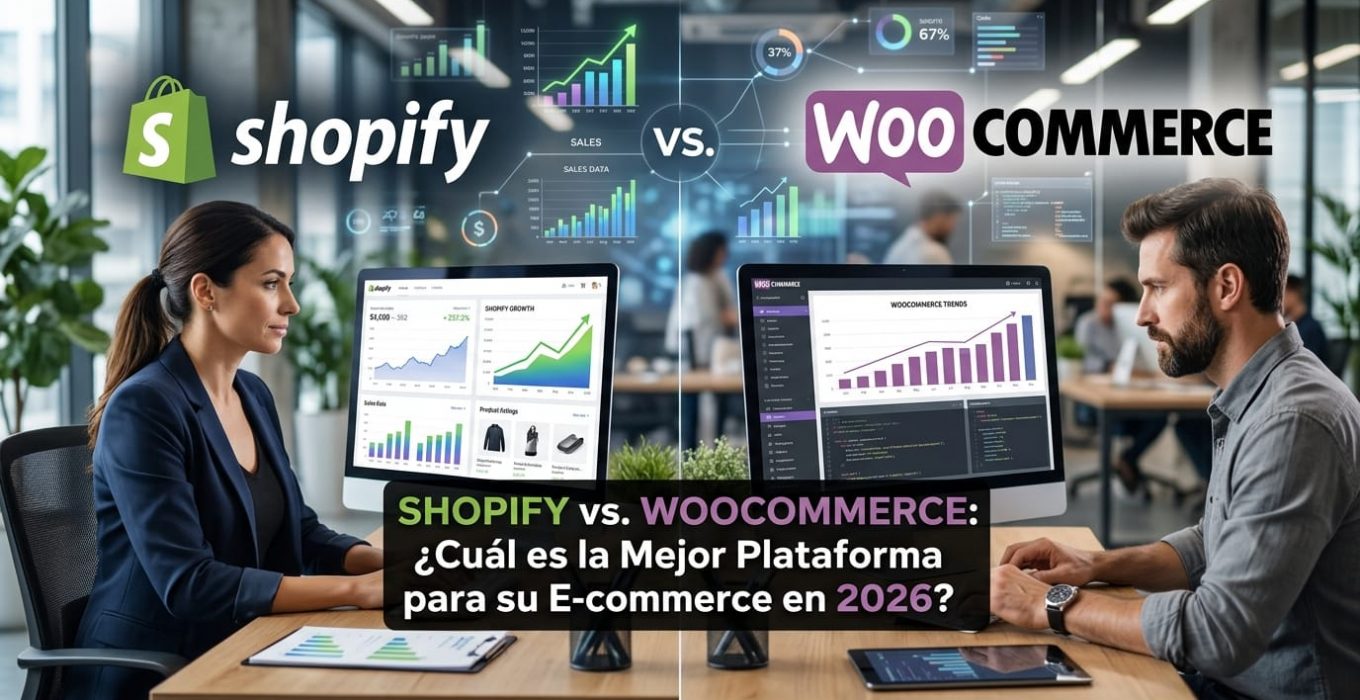
Shopify vs. WooCommerce: Which is the Best Platform for Your E-commerce in 2026?

The decision to launch or migrate an online store is one of the most crucial for any business in the digital ecosystem. In this arena, two giants vie for leadership: Shopify and WooCommerce. Both platforms offer robust solutions for e-commerce, but each with a distinct philosophy, set of functionalities, and management model. The key question is not which is superior in abstract, but which is best for your specific business in 2026.

At adrianalcala.es, we understand that choosing the right platform is the first step towards successful e-commerce. This article will break down the features, advantages, and disadvantages of Shopify and WooCommerce, helping you make an informed decision that drives your growth and maximizes your digital investment.

1. Shopify: The Simplified All-in-One Solution

Shopify es una plataforma de e-commerce “todo-en-uno” basada en la nube, conocida por su facilidad de uso y su enfoque en simplificar la venta online para emprendedores y empresas de todos los tamaños. No requiere conocimientos técnicos profundos para empezar.

Advantages of Shopify:

  • Ease of Use: Su interfaz intuitiva permite configurar una tienda rápidamente, añadir productos, gestionar pedidos y procesar pagos sin necesidad de programar. Es ideal para quienes buscan una solución “plug-and-play”.
  • Hosting and Security Included: Shopify handles hosting, security (SSL certificates), updates, and maintenance. This frees the merchant from technical concerns.
  • Robust Customer Support: It offers 24/7 support, which is invaluable for quickly resolving issues, especially for new merchants.
  • Scalability: Although easy to start, Shopify can scale to handle large sales volumes and grow with your business.
  • Apps and Themes: It has an extensive app market (App Store) to add functionalities and a wide range of themes (free and paid) to customize the design.

Disadvantages of Shopify:

  • Monthly Cost and Fees: Shopify operates on a monthly subscription model. Additionally, if you don't use Shopify Payments, transaction fees apply. These costs can add up as the business grows.
  • Limited Flexibility: Although customizable with apps and themes, it has less flexibility in code-level customization and data management compared to open-source solutions.
  • Platform Dependence: Al ser una solución SaaS, usted no “posee” la plataforma, lo que implica cierta dependencia de las políticas y funcionalidades de Shopify.

2. WooCommerce: Open-Source Power and Flexibility with WordPress

WooCommerce is an open-source plugin for WordPress that transforms it into a robust e-commerce platform. It requires an existing WordPress installation and offers almost unlimited control over the store.

WooCommerce Advantages:

  • Total Control and Flexibility: Being open-source and running on your own hosting, WooCommerce offers you absolute control over every aspect of your store, from design to functionality and data. It's ideal for those who want deep customization.
  • Low Initial Cost (Potentially): The WooCommerce plugin is free. Costs are derived from web hosting, domain, themes, and other premium plugins. It can be more economical in the long run for certain configurations.
  • WordPress Ecosystem: You benefit from the vast WordPress community, its thousands of themes and plugins, and familiarity with its CMS for content management (blog, pages).
  • Powerful SEO: Thanks to its integration with WordPress and plugins like Yoast SEO or Rank Math, WooCommerce offers very powerful and customizable SEO tools.

WooCommerce Disadvantages:

  • Learning Curve: Requires more technical knowledge for initial setup, maintenance (updates, security), and troubleshooting. You are responsible for hosting and security.
  • Hidden Costs: Although the plugin is free, costs for hosting, security, premium themes, additional plugins, and technical support can add up and sometimes exceed Shopify's cost.
  • Performance: The speed and performance of the store depend heavily on the quality of hosting and correct technical optimization. A poorly optimized site can be slow.
  • Fragmented Support: Support comes from the WordPress community, plugin developers, or your hosting provider, which can be less direct than Shopify's unified support.

3. Shopify vs. WooCommerce: Which to Choose in 2026?

The ideal choice depends on your business's specific needs and priorities:

  • Choose Shopify if:
    • You need a quick and easy solution to start selling online.
    • You don't have technical knowledge or prefer not to handle maintenance and security.
    • Valora el soporte técnico 24/7 y una experiencia “todo incluido”.
    • You are willing to pay a monthly fee and potential commissions for convenience and service.
  • Choose WooCommerce if:
    • You desire complete control and unlimited customization over your store.
    • You already have a WordPress site and are familiar with its ecosystem.
    • You have technical knowledge or a team that can manage hosting, security, and maintenance.
    • You want to maximize flexibility and minimize long-term recurring costs, assuming greater technical responsibility.
    • You need very specific integrations or functionalities that require deep code access.

Conclusion: Strategy is the Core, the Platform is the Vehicle

Both Shopify and WooCommerce are exceptional tools that, in 2026, continue to evolve to offer cutting-edge solutions. The final decision is not based on intrinsic superiority but on alignment with your business strategy, budget, technical resources, and long-term goals. Consider your management capacity, the importance of customization, and the scale of your project.

In adrianalcala.es, we are experts in e-commerce implementation and optimization, whether you choose the managed simplicity of Shopify or the robust flexibility of WooCommerce. We help you analyze your needs, select the ideal platform, and build an online store that not only sells but grow and prosper.

Ready to take the leap into e-commerce with the perfect platform for you? Contact us today and let's design your online success strategy together.

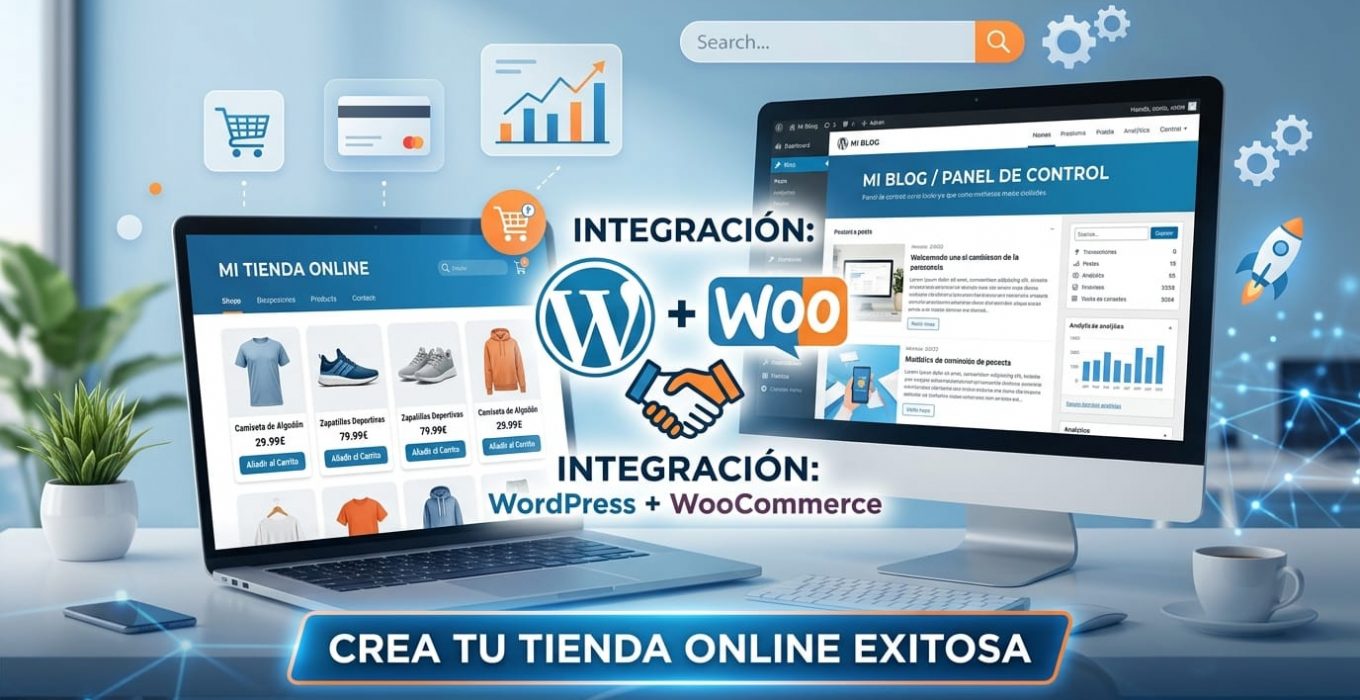
Mastering WordPress and WooCommerce: Essential Guide to Managing and Optimizing Your Digital Presence

In the fast-paced digital world, transforming an idea into a thriving online business requires robust tools and strategic knowledge. WordPress, as the world's most popular content management system (CMS), and WooCommerce, its powerful e-commerce extension, form an unbeatable duo. But how do you navigate their versatility to build, manage, and optimize a digital presence that truly converts?

At adrianalcala.es, we understand that effective management of your digital platform is as crucial as its design. This article will serve as your essential guide, exploring key WooCommerce tutorials, topics of interest in the WordPress ecosystem, and practical tips for your site to not only function but thrive, maximizing every customer interaction.

1. WordPress: Beyond a Simple Blog (Although it's Excellent for It)

WordPress is much more than a blogging platform; it's a flexible CMS capable of powering any type of website, from portfolios to complex enterprise platforms. While the art of creating a blog has already been covered, there are rudimentary tutorials, but essential, which ensure the solidity of your digital foundation:

  • Installation and Initial Configuration: Although often pre-installed, understanding the basic steps of a clean installation and initial configuration (language, timezone, site title) is fundamental to laying the right foundation.
  • Managing Pages and Posts: Dominar la diferencia y el uso estratégico de las páginas (contenido estático como “Sobre nosotros”, “Servicios”) y las entradas (contenido dinámico de blog) es clave para una arquitectura de contenido efectiva.
  • Creating Effective Navigation Menus: An intuitive menu is vital for user experience. Learn to structure and customize menus to guide your visitors through your site effortlessly.
  • Installation and Management of Essential Plugins: From security (e.g., Wordfence) and SEO (e.g., Yoast SEO or Rank Math) to cache optimization (e.g., WP Super Cache or LiteSpeed Cache), plugins expand WordPress functionality. Knowing how to install, configure, and keep them updated is essential.

2. WooCommerce: Turning Your WordPress into a Successful Online Store

WooCommerce transforms your WordPress site into an e-commerce platform complete and scalable. To master this tool, pay attention to these topics and tutorials:

  • Initial Store Setup: Correctly setting up currency, taxes, shipping zones, and methods is the critical first step to operating legally and efficiently.
  • Adding and Managing Products: Learn to create different product types (simple, variable, grouped, virtual, downloadable) and optimize their descriptions, images, and prices for maximize its appeal.
  • Order and Customer Management: Familiarize yourself with the WooCommerce dashboard to process orders, manage refunds, and maintain an organized record of your customers.
  • Product Listing Optimization for Conversions: Beyond basic information, discover how to use reviews, clear calls to action, and attractive image galleries to boost sales.
  • Key Plugins and Extensions for WooCommerce: Integrate popular payment gateways (Stripe, PayPal), improve the checkout experience, and explore extensions for advanced functionalities like subscriptions or bookings.

3. Topics of Interest and Optimization in the WordPress Environment

The success of your WordPress platform lies not only in its functionality but also in its presentation and performance:

  • Theme Selection: The choice of WordPress theme is crucial. Look for themes that are responsive (adaptable to all devices), speed optimized, and ensure full compatibility with WooCommerce if you have an online store.
  • Design Customization: Leverage the WordPress Customizer to adjust colors, typography, and layout without code. For more advanced control, explore page builders (e.g., Elementor, Beaver Builder) that allow you intuitive design.
  • WordPress Security: Your site is a valuable asset. Implement essential measures like strong passwords, regular updates, automatic backups, and security plugins to protect yourself against threats.
  • Performance and Speed: A fast site improves user experience and SEO. Use optimization tools (e.g., caching tools, image optimization) and monitor its performance with Google PageSpeed Insights.

4. Maximizing Potential: Advanced Tips for Your Digital Platform

To take your digital presence to the next level, consider these strategies:

  • Basic SEO for WordPress: Enhance your web design knowledge with on-page optimization using plugins like Yoast SEO or Rank Math. These will help you optimize titles, meta descriptions, and content.
  • Web Analytics: Integrate Google Analytics to monitor your site's traffic, understand user behavior, and make data-driven decisions.
  • Content Strategies for WordPress and WooCommerce: Develop a content strategy that combines informative blogs, product guides, and tutorials to attract and educate your audience, strengthening your authority and visibility.

Conclusion: Your Digital Success in Expert Hands

Mastering WordPress and WooCommerce is more than a technical skill; it is a vital strategy for any business aspiring to excel in the digital ecosystem. From basic management to advanced optimization, every step is an opportunity to conquer your customers and scale your business.

In adrianalcala.es, we specialize in the construction, management, and optimization of digital platforms with WordPress and WooCommerce. Our team is ready to guide you through challenges and transform them into opportunities, ensuring your online presence is not only functional but a conversion machine.

Ready to unleash the full potential of your digital business? Contact us today and let us build the path to your online success.

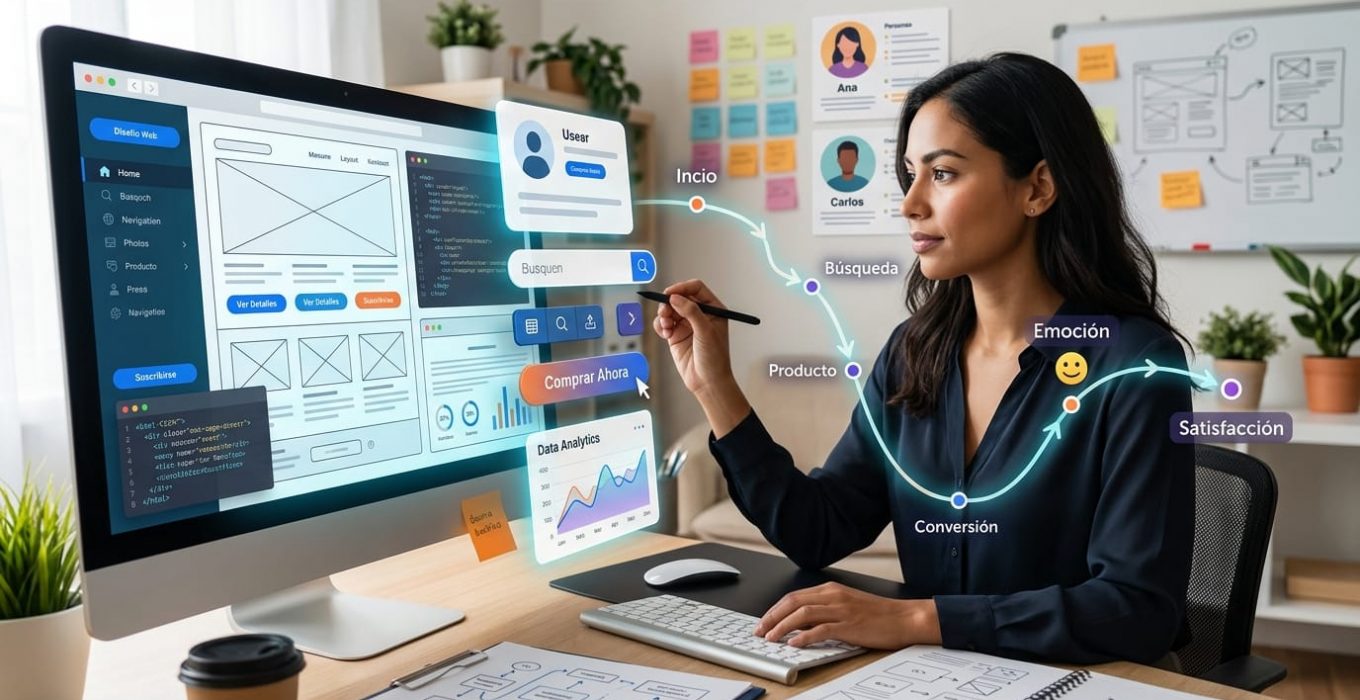
Web Design and UX/UI: The Indispensable Fusion to Conquer Your Customers

In today's digital landscape, an attractive website is no longer enough. To truly captivate and convert your visitors into loyal customers, your online presence must offer an experience that is not only visually pleasing but also intuitive, efficient, and, above all, memorable. This is where the synergy between Web Design, User Experience (UX), and User Interface (UI) becomes the fundamental pillar of your digital strategy.

At adrianalcala.es, we understand that the user-centered design es la clave. No se trata solo de “cómo se ve” su sitio, sino de “cómo se siente” y “qué tan fácil es usarlo”. Esta fusión indispensable es lo que transforma un simple visitante en un cliente satisfecho y recurrente.

1. Unraveling the Fusion: Web Design, UX, and UI

Although often used interchangeably, the Web Design, UX, and UI are distinct disciplines that, when harmoniously integrated, create a digital masterpiece:

  • Web Design: It is the general term that encompasses the creation and maintenance of websites. It includes aesthetics (colors, typography, graphics) and basic functionality. Think of it as the overall architecture and layout of spaces in a building.
  • User Experience (UX): It focuses on the user's emotional and functional journey when interacting with your site. Is it easy to find information? Is the purchase process smooth? Does the interaction generate frustration or satisfaction? UX aims to make the experience useful, usable, desirable, findable, accessible, and credible. It is the comfort, logic, and satisfaction you feel while moving through that building.
  • User Interface (UI): It is the visual and tangible point of contact between the user and the system. It includes buttons, icons, menus, text fields, and all the visual elements the user interacts with. Good UI is clear, consistent, and aesthetically pleasing. They are the doors, windows, hallways, and signage that make the building easy to navigate and visually appealing.

The key lies in understanding that a brilliant UI without a well-thought-out UX is like a beautiful door that leads nowhere. And a Web Design that ignores both, is a building without soul or functionality.

2. Why is Solid UX/UI Indispensable for Your Web Design?

Investing in quality UX/UI in your web design translates directly into strategic benefits for your business:

  • Visitor Retention: A site that is easy to use and visually appealing invites users to stay longer, explore more pages, and delve deeper into your content. The frustration is the number one enemy of retention.
  • Building Trust and Credibility: A professional interface and a fluid experience convey seriousness and reliability. Users trust sites that work well and look good, which strengthens your brand perception.
  • Increased Conversions: The web usability is a direct sales driver. An intuitive purchase process, clear forms, and well-placed calls to action guide the user frictionlessly towards conversion, whether it's a purchase, a subscription, or a contact.

Professional Web Design: The Unavoidable Key to Your Business's Digital Success in 2026

In the fast-paced digital era, your online presence is not a mere option but a strategic necessity. In a universe where every click counts and attention is a precious commodity, how do you ensure that your virtual storefront not only attracts fleeting glances but seduces, retains, and converts visitors into loyal customers? The answer lies in a discipline that fuses art and science: Web Design professional.

Web design is not mere aesthetic embellishment; it is the invisible and visible architecture of your online success. It is the alchemy that transforms ideas, services, and products into fluid, intuitive, and, above all, profitable digital experiences. In this article, we will break down the pillars of modern web design, its direct impact on your SEO strategy, and how an expert approach can catapult your business to the digital forefront, ensuring lasting relevance in this 2026.

1. What Do We Understand by Professional Web Design? A Comprehensive Perspective

The web design is a multifaceted process that ranges from strategic planning and logical structure to impeccable functionality and captivating aesthetics of a digital interface. It is the orchestration of visual and functional elements to create an online environment that not only informs but also generates a meaningful connection with the user.

It is crucial to clarify that the Web Design and Web Development, although interconnected, play distinct roles:

  • Web Design: Se enfoca en la “fachada” y la “experiencia” del usuario. Decide cómo se ve el sitio, cómo se siente y cómo se interactúa con él (UX/UI, gráficos, colores, tipografía).
  • Web Development: Es la “ingeniería” subyacente. Se encarga de construir y mantener la estructura del sitio mediante código, asegurando que todo funcione correctamente “detrás de escena”.

The harmonious integration of both is fundamental to achieving optimal results. Brilliant design without solid implementation is as ineffective as perfect engineering with an incomprehensible interface.

2. Web Design as a Strategic Pillar: Quantifiable Benefits for Your Business

Investing in a web design professional is not an expense, but a strategic investment with quantifiable returns:

    • The First Impression Lasts: In the digital world, your website is your global business card. An impeccable design not only attracts but also generates instant credibility and trust in your visitors, making the difference between a potential customer and an abandoning visitor.
    • SEO Optimization: Your Silent Ally: Google and other search engines prioritize user experience. The structure, loading speed, and usability of your design are critical factors that algorithms love, boosting your organic visibility and attracting qualified traffic.
  • Differentiation in a Saturated Market: In a digital environment where competition is fierce, a unique and tailored design allows you to stand out, communicate your value proposition unequivocally, and forge a memorable digital identity that resonates with your audience. Generic templates can offer a presence, but professional design gives you a voice.
  • Turning Visitors into Customers: An intuitive design is not accidental; it's the result of a deliberate strategy. It guides the user smoothly through your content, products, or services, towards the desired action (a purchase, a contact, a subscription), optimizing your sales funnels and maximizing your Return on Investment (ROI).
  • Universal Accessibility and Expanded Reach: Inclusive design ensures that your message reaches everyone, on any device and with any ability. This is not only ethical but significantly expands your potential market and improves your brand image.

3. The Indispensable Elements of Cutting-Edge Web Design

For a web design that transcends mere aesthetics and delivers results, it is imperative to master these elements:

  • User Experience (UX) and Usability: They are the backbone of any successful site. A UX-focused design ensures that the interaction is intuitive, efficient, and satisfying for the visitor. Usability refers to the ease with which users can learn to use, operate, and understand your site.
  • Responsive and Mobile-First Design: La adaptabilidad ya no es una opción, es un requisito ineludible. Su sitio debe garantizar una experiencia fluida y consistente en cualquier pantalla, desde el escritorio más amplio hasta el dispositivo móvil más compacto. La filosofía “Mobile-First” prioriza el diseño para móviles, asegurando una base sólida para el resto de dispositivos.
  • Loading Speed: Patience is a Virtue (that users don't have): In the age of immediacy, a slow site is an abandoned site. Performance is a critical factor for user retention and, therefore, for SEO. A design optimized in images, code, and resources ensures ultra-fast loading.
  • Coherent Visual Identity: The color palette, typography, images, and graphic elements should reflect and reinforce the essence of your brand. Visual consistency creates a unified and memorable experience, strengthening your business's recognition.
  • Intuitive Information Architecture: The logical and hierarchical organization of content is crucial. A well-thought-out information architecture allows for effortless navigation, helping users find what they're looking for quickly and search engines to crawl and index your site efficiently.

4. Web Design Typologies: Choosing the Right Strategy

There are various approaches to web design, each with its merits. While static designs are useful for small sites with infrequent updates, dynamic designs allow constant interaction and personalized content.

However, the most strategic approach for a growing business is User-Centered Design (UCD) and personalization. This involves creating a site that not only adapts to different devices but also anticipates and responds to the individual needs and preferences of each visitor, offering a relevant and memorable experience.

5. The Perfect Synergy: Web Design and SEO Positioning

The Web Design and SEO are two sides of the same coin. A technically and structurally sound design is the unavoidable foundation of any successful SEO strategy. Aspects such as:

  • Technical Aspects: friendly URLs, sitemaps well-structured, image optimization (size, format, alt text) and structured data markup (Schema Markup) help search engines understand the context of your content.
  • Content and Hierarchy: The text readability, heading hierarchy (H1, H2, H3) logic and valuable, in-depth, and relevant content, are crucial for satisfying both the user and search engine algorithms.

A visually appealing site that is invisible on Google does not fulfill its purpose. Therefore, collaboration between designers and SEO specialists from the project's inception is vital.

6. Web Design Trends for 2026: Preparing Your Business for the Future

The landscape of web design is constantly evolving. By 2026, these trends are paving the way:

  • Artificial Intelligence at the Service of Design: AI is no longer science fiction. It enables dynamic real-time content personalization, predictive interface optimization and design process automation, making each visit unique.
  • Microinteractions and Immersive Experiences: Small animated details and subtle visual effects captivate the user, guide their attention, and enrich the experience without overwhelming the site. The narrative scroll and lightweight 3D elements add a layer of immersion.
  • Sustainable and Ethical Design: The energy efficiency and digital responsibility are gaining ground. Lighter designs, with optimized code and minimal resources, contribute to a greener and faster internet.
  • Data-Driven Approach: Design decisions are increasingly based on real user behavior analysis, not on assumptions. Advanced tools allow us to understand how visitors interact and adapt the design to maximize results.

Conclusion: Win Over Your Customers with a Superior Digital Experience

The Web Design professional is, in essence, a strategic investment that defines your brand's perception, optimizes your reach in the vast digital ocean, and undeniably boosts your commercial results. It's not merely about building a site; it's about creating a living, breathing, and constantly evolving digital platform that grows with your business and adapts to changing market dynamics.

In adrianalcala.es, we are experts in designing digital experiences that not only meet your expectations but exceed them. We understand that your online presence is a vital extension of your business, and our mission is to transform it into a tangible competitive advantage.

Ready to transform your digital presence and win over your customers with an unparalleled user experience? Contact us today and take the next step towards online success.

Find us in Dénia

Need help?

Let's make it faster, now you can consult us via WhatsApp or by scheduling a meeting!

My name is Adrián Alcalá, an expert in website design and custom automations based on WordPress for over 8 years.

SOCIAL MEDIA

IG: @adrianalcala LINKEDIN: @adrianalcala

Copyright adrianalcala 2024 All Rights Reserved