

Making a good website is the part that is learned the most. Getting someone to commission it from you is the part that is taught the least. If you already know how to build with WordPress but your schedule is empty, the problem is almost never technical: it's about the offer, the channels, and the follow-up. This guide explains how to get web design clients in an organized way, without relying on luck or lowering prices.
The essentials in 30 seconds
- Before looking for clients, have a clear offer: for whom, what you solve, what it includes, and how much it costs.
- Don't rely on a single channel: contacts, businesses in your area, collaborations, content, portfolio, and recommendations.
- When you write to a business, talk about their website and their problem, not about you.
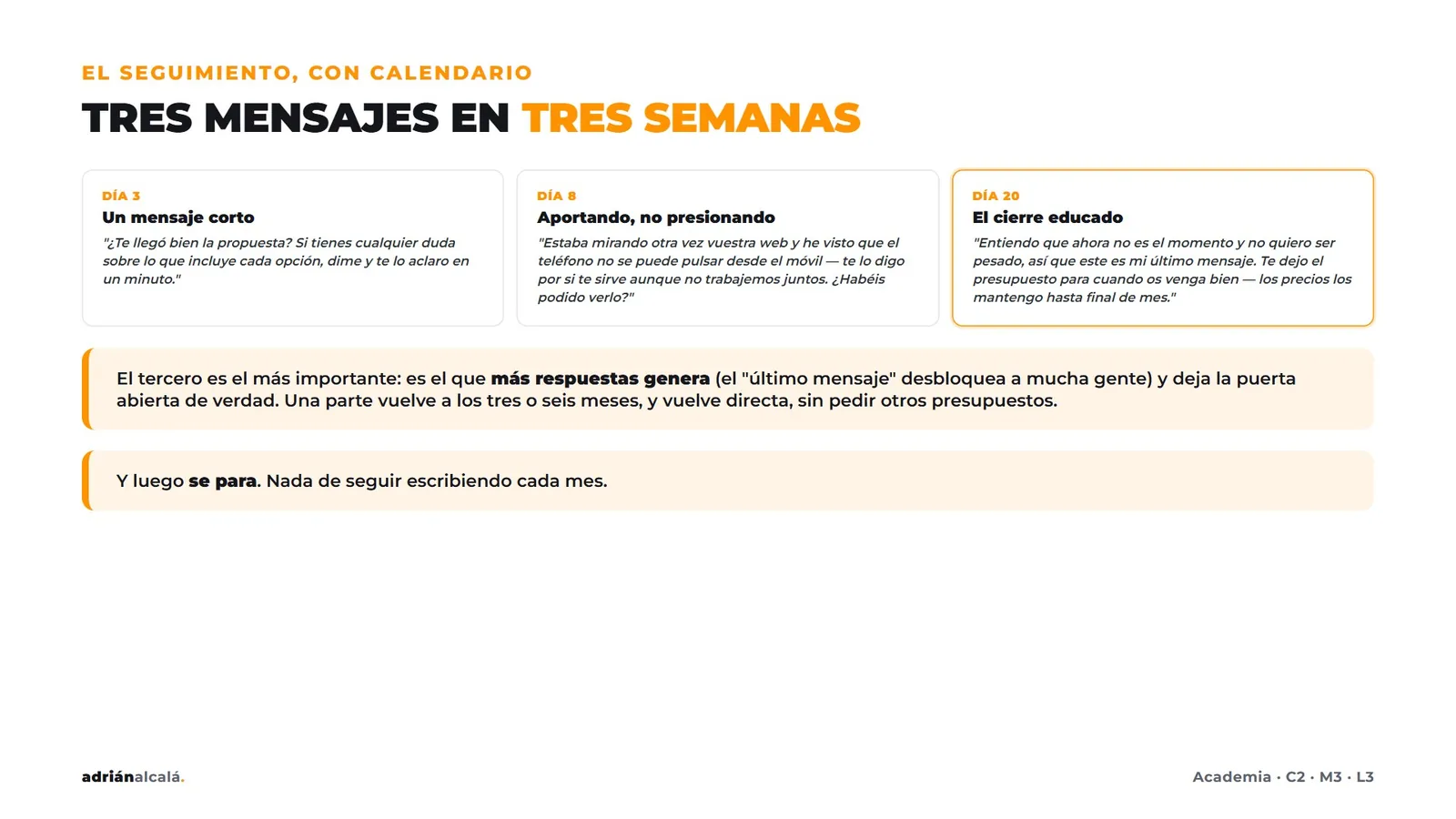
- Most assignments arrive in the follow-up, not in the first message.
In this article
First, an offer that it's understood
«I make websites» is not an offer: it's a profession. An offer says who you help, what you achieve, and under what conditions. Compare these two phrases:
- «I design professional and modern websites.»
- «I make websites for clinics and practices that want to receive appointments without being tied to the phone. Fixed price and sketch before payment.»
The second one tells the client if it's for them, what they gain, and what risk they run. Before looking for clients, write yours: for whom, what problem you solve, what it includes y how it's paid.
Six channels for getting clients
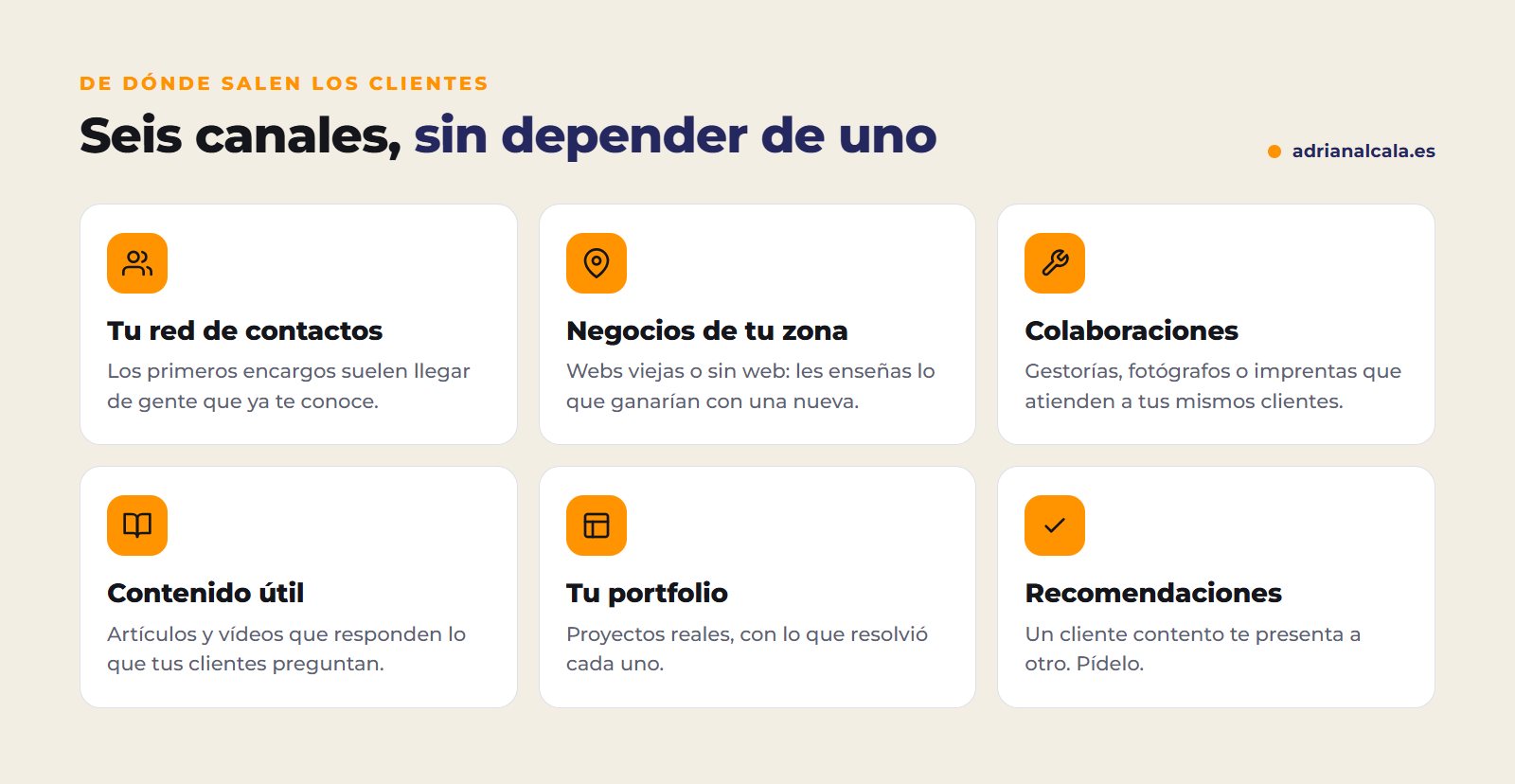
1. Your network of contacts
Family, friends, former colleagues, and businesses where you are already a client. It's not about asking for favors, but about letting them know what you do. The first assignments almost always come from here, and they give you the first projects to show.
2. Businesses in your area
Search Google Maps for your target sector in your city and review their websites. Those that are old, don't look good on mobile, or don't have a website are potential clients. If you want a criterion to detect them, the signs of when it's convenient to redesign a website serve as a list for you.
3. Collaborations
Accounting firms, photographers, printers, marketing consultants: professionals who serve your same clients but don't make websites. A good relationship with two or three of them can give you constant assignments.
4. Useful content
Articles, short videos, or publications that answer your clients' questions: how much a website costs, what it needs, how to appear on Google. It's slow at first, but it works for you when you're not looking.
5. Your portfolio
Every finished project is proof. Show it well: what business it was, what problem it had, and what was resolved. A card with context convinces much more than a gallery of screenshots.
6. Recommendations
A happy client introduces you to another, but almost never does it alone. Ask for it when delivering the project, when satisfaction is highest.
How to write to a business without looking like spam
- Look at their website before writing. On mobile, like one of their customers.
- Detect two or three concrete improvements: the phone number isn't visible, it doesn't appear on Google for its service, the menu is a PDF.
- Write a short and personal message. Their name, their business, and what you've seen. No generic templates.
- Offer something useful without commitment: a sketch of the homepage, a quick review, or a concrete idea.
- Follow up. If they don't reply, one or two more messages, spaced out, with something new to contribute.
An example of a first message
«Hello, Marta. I've seen your clinic's website from my mobile and the "request appointment" button is hidden at the bottom of the page. Also, when I search for "physiotherapy" and your neighborhood, you don't show up. If you like, I can prepare a sketch for you of how the homepage would look with those two things resolved, no commitment.»
The meeting and the budget: where it closes
When a business agrees to talk, the goal of the meeting is not to introduce yourself, but to understand what they need. Ask what they sell, who their client is, what works for them today and what doesn't. Afterwards, the budget makes the difference:
| Budget that hinders | Budget that convinces | |
|---|---|---|
| Price | "From..." or by the hour | Closed and in writing |
| Content | Technical list of plugins and technologies | What they will achieve and what it includes |
| Deadlines | Without dates | Dates and what you need from them |
| After | Nothing | Maintenance and optional monthly services |
That the client stays with you
Acquiring a client costs much more than retaining one. Therefore, the delivery of the website should not be the end of the relationship, but the beginning of another:
Offer it on the same day of delivery, when the client is happy with their new website. Later it costs much more.
Mistakes that drive clients away
- Lowering prices to get the first ones. You attract clients who only look at the price and it's hard to raise it later.
- Speaking in jargon. The client doesn't care about the theme or the builder: they care about receiving calls.
- Giving up after the first message. Many people respond to the second or third.
- Not asking for recommendations. It's the cheapest channel and the least used.
If you're starting out and still don't have a clear business structure, in how to set up a web design agency you have the four pillars.

Adrián Alcalá Web developer
Without an acquisition system, every month starts from scratch. With one, you know where the next client will come from.
Frequently Asked Questions
Do I need a portfolio to get my first clients?
It helps a lot, but you can start with two or three of your own projects or for acquaintances, well presented. The important thing is that it shows how you work and what you solve.
Do freelance platforms work?
They can give you some assignments, but you compete with many professionals and almost always on price. As a complementary channel, yes; as the sole channel, it's difficult to build a stable business.
Is it better to write by email, by WhatsApp or go in person?
It depends on the business. For a neighborhood store, stopping by in person with something specific to show usually works; for a service company, a well-personalized email. What doesn't work on any channel is the generic message.
How many follow-up messages are too many?
Two or three spaced follow-ups are enough. If there's no response, note it down and try again months later with something new.
What price do I set for my first websites?
Calculate the real hours a website takes you, your costs and what it brings to the client. Competing to be the cheapest attracts clients who only look at the price; a clear offer, with what it includes in writing, at a price you can sustain, is better.
Acquiring clients too you learn
In the Academy, learn to make money with websites: an entire course is dedicated to your offer and your prices, where clients come from, the meeting, the budget and the monthly fees. It hasn't opened yet: the waiting list has.
To go deeper
Written by Adrián Alcalá
Web designer in Dénia. If you have any questions about what you have read, write to me.